When Agreement Becomes the Enemy: Rethinking Consensus in High-Stakes Organizational Decisions

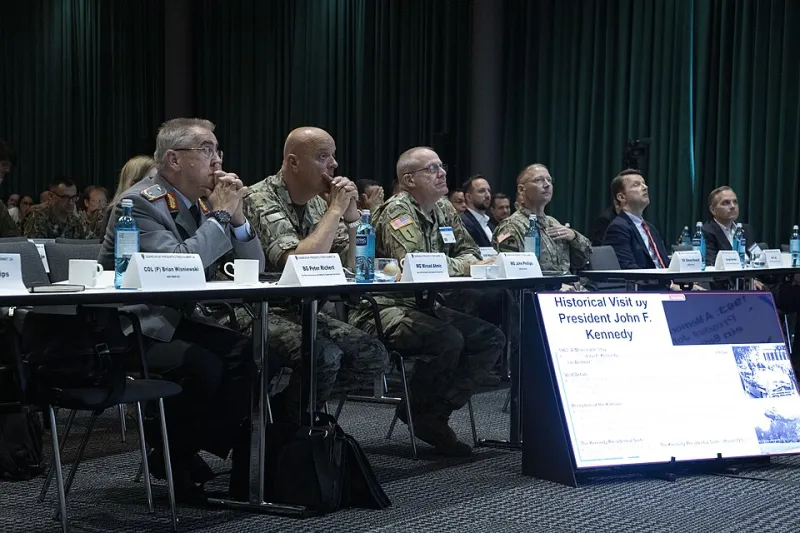
Photo: Christiaan Briggs, CC BY-SA 3.0, via Wikimedia Commons
There is a particular kind of organizational paralysis that does not look like paralysis at all. Meetings are well-attended. Stakeholders are engaged. Feedback is solicited, documented, and circulated. And yet, months pass without a meaningful decision being made. This is the paradox of consensus culture: the very process designed to generate commitment ends up consuming the energy needed to act on it.
For many American organizations, consensus has become less a tool and more a default—a reflexive response to the discomfort of decisive authority. The result is a decision-making environment in which inclusivity is treated as synonymous with quality, and speed is quietly stigmatized as recklessness. Neither assumption survives close scrutiny.
The Structural Origins of Consensus Dependency
Consensus dependency rarely emerges from a single policy decision. More often, it develops incrementally, embedded in cultural norms that reward participation over resolution. Organizations that have experienced high-profile failures driven by top-down mandates frequently overcorrect, institutionalizing broad input requirements as a form of institutional risk management.
Flattened hierarchies, cross-functional team structures, and matrix reporting relationships—all genuinely valuable organizational innovations—can inadvertently amplify this tendency. When authority is distributed without corresponding clarity about where final decision rights reside, the path of least resistance becomes perpetual consultation. No one person feels empowered to close the loop, so the loop never closes.
This dynamic is particularly acute in organizations undergoing transformation. The very moments that demand speed and conviction—entering a new market, restructuring operations, responding to a competitive threat—are often the moments when consensus processes are most aggressively invoked, precisely because the stakes feel too high to leave to any single voice.
What Consensus Actually Costs
The costs of excessive consensus-seeking are rarely captured on any financial statement, which is precisely why they persist. Consider the compounding effect across a single fiscal year: a major product decision delayed by three months of stakeholder alignment cycles; a talent acquisition held up while seven department heads align on role requirements; a technology investment stalled as competing internal constituencies negotiate feature priorities.
Each delay, in isolation, may appear manageable. In aggregate, they represent a systematic drag on organizational velocity that compounds over time. Competitors who move faster capture market share, talent, and customer loyalty—not necessarily because their decisions are better, but because they are made and executed while others are still building consensus.
Beyond velocity, consensus culture carries a subtler cost: the erosion of strategic clarity. When decisions must satisfy every stakeholder at the table, the natural result is compromise—not in the constructive sense, but in the sense of proposals stripped of their most distinctive and consequential elements. Bold strategies become modest ones. Differentiated positions become safe, undifferentiated ones. The organization optimizes for internal peace rather than external competitiveness.
Distinguishing Productive Alignment from Organizational Paralysis
None of this is an argument against stakeholder engagement. The evidence is clear that decisions made without adequate input suffer from blind spots, generate resistance, and frequently fail during implementation. The question is not whether to engage stakeholders, but how, when, and with what expectations about the outcome.
A useful framework distinguishes between three modes of stakeholder involvement:
Input without veto authority. Relevant parties are consulted, their perspectives are genuinely considered, and that information shapes the decision—but the decision itself rests with a designated owner. This model preserves the intelligence value of broad input while maintaining decisional accountability.
Consensus with defined scope. Full consensus is required, but only among a limited, explicitly defined group of decision-makers. This prevents the common failure mode in which consensus processes expand organically until they include every party with a tangential interest.
Unilateral authority with transparency. For time-sensitive or operationally contained decisions, a single accountable leader decides and communicates the rationale clearly. Transparency about the reasoning—not the decision itself—is what generates the understanding and cooperation needed for effective execution.
The critical discipline is applying the right mode to the right decision type. Operational decisions with limited strategic implications rarely warrant consensus. Decisions that fundamentally alter organizational direction or significantly affect multiple functions typically benefit from structured alignment—but alignment with a clear endpoint, not an open-ended process.
Rebuilding Decision Velocity Without Sacrificing Legitimacy
Organizations that successfully shift away from consensus dependency do not simply strip away engagement processes. They redesign those processes with explicit attention to accountability, timelines, and decision rights.
Practical steps include establishing formal RACI (Responsible, Accountable, Consulted, Informed) frameworks for recurring decision categories, setting and enforcing consultation deadlines that prevent indefinite deliberation, and training leaders to distinguish between the discomfort of an unpopular decision and the legitimate signal of an ill-considered one.
Culturally, the shift requires rehabilitating decisiveness as a leadership virtue. In organizations where consensus has become the norm, leaders who make clear, timely decisions are sometimes perceived as dismissive or autocratic—even when their decisions are sound and their consultation was genuine. Reframing decisiveness as a form of organizational respect—a signal that leaders take their authority seriously and do not use process as a substitute for judgment—is essential work.
The Strategic Imperative
American businesses operating in today's competitive environment cannot afford to treat consensus as a universal good. The organizations that will distinguish themselves over the next decade are those that develop genuine sophistication about when alignment adds value and when it adds only delay.
This is not a call for command-and-control management. It is a call for honest organizational self-assessment. If your most important strategic initiatives are consistently slower than planned, if your most capable leaders are spending disproportionate time in alignment meetings rather than executing, and if your decisions emerge from process looking fundamentally different—and weaker—than they entered it, you may not have a leadership problem or a strategy problem. You may have a consensus problem.
Recognizing that distinction is the first step toward resolving it.