Shadow Hierarchies: Understanding the Informal Power Networks That Quietly Run Your Organization
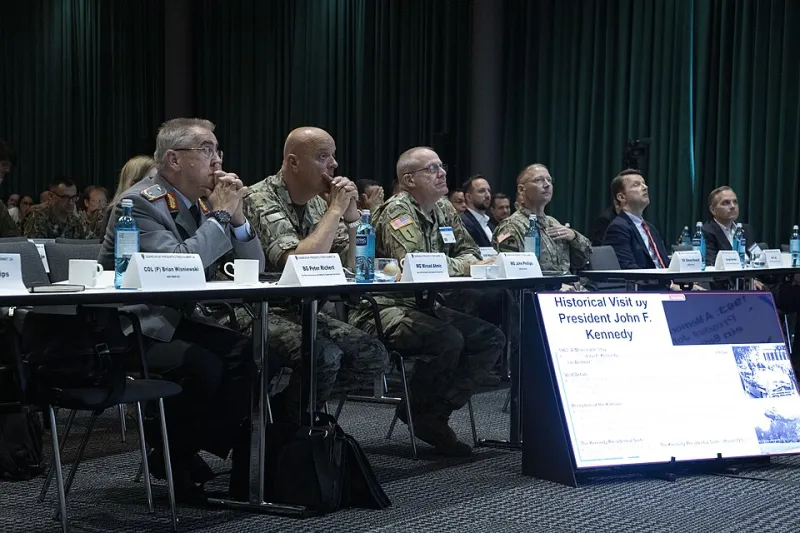
Photo: U.S. Army USArmyEURAF by Lauren Harrah, Public domain, via Wikimedia Commons
Every seasoned executive has experienced the phenomenon at least once. A strategic initiative is announced with full leadership backing, a detailed rollout plan, and adequate resources. Within six months, it has quietly lost momentum—not because of budget constraints or market shifts, but because the people who needed to champion it simply did not. Meanwhile, a separate, less-resourced project gains traction almost effortlessly, moving through the organization with surprising speed. The difference, more often than not, comes down to one variable: informal power.
Organizations are not the clean, hierarchical structures that appear on an org chart. They are social ecosystems, shaped as much by trust, reputation, and relationship history as by titles and reporting lines. Understanding this dual reality is not merely an academic exercise—it is a strategic imperative.
The Two Organizational Realities Every Leader Navigates
Formal structure defines authority. It establishes who is accountable for what, who approves decisions, and how resources are officially allocated. This architecture is necessary and provides important clarity. But formal structure does not tell you who people actually listen to when they are uncertain. It does not reveal whose endorsement can make a skeptical team member a quiet advocate, or whose subtle resistance can quietly neutralize a mandate from the top.
Informal networks fill that gap. These are the patterns of communication, trust, and influence that emerge organically over time—through shared projects, mentorship relationships, cross-departmental friendships, and even shared frustrations. A mid-level operations manager with fifteen years at the company may carry more influence over frontline adoption decisions than a newly appointed vice president. A respected engineer who left the company two years ago may still shape how her former colleagues evaluate new technology investments. These dynamics are real, measurable, and profoundly consequential.
Organizational network analysis (ONA) has emerged as a formal methodology for mapping these relationships. By surveying employees about whom they turn to for information, advice, and problem-solving, leaders can construct a social topology of their organization—a map that often looks strikingly different from the official hierarchy.
When Informal Networks Accelerate Strategy
Consider a regional healthcare system in the Midwest that was attempting to implement a new patient intake protocol across thirty-two facilities. Initial rollout through the formal hierarchy—directives from the CMO, training sessions delivered by HR, and compliance tracking by department heads—produced inconsistent results. Adoption rates varied wildly across facilities with no clear correlation to size or resources.
A closer examination revealed that a small cohort of charge nurses, none of whom held formal leadership titles, functioned as informal connectors across the system. They were the people their colleagues called when they had questions, the individuals whose opinions shaped how new procedures were interpreted at the floor level. When the implementation team shifted its approach—engaging these informal connectors early, soliciting their input on protocol design, and involving them in peer-led training sessions—adoption rates improved significantly across facilities where these individuals were active.
The lesson is not that formal authority is irrelevant. It is that formal authority and informal influence work most effectively in concert. Strategic initiatives that earn the endorsement of key informal network nodes move faster, encounter less passive resistance, and tend to sustain themselves more reliably over time.
The Risks of Networks That Operate Without Visibility
Informal networks are not inherently constructive. The same social dynamics that can accelerate a well-designed strategy can also calcify dysfunction, protect underperformance, or concentrate access to information in ways that undermine equity and organizational health.
In organizations where informal networks operate entirely in the shadows—unacknowledged and unexamined by leadership—several patterns tend to emerge. Information gatekeeping becomes a source of informal power, with certain individuals controlling access to key decision-makers in ways that distort organizational decision-making. Legacy relationships can protect behaviors or practices that would not survive scrutiny if they were more visible. New employees, particularly those without existing social capital within the organization, may find it extraordinarily difficult to gain traction regardless of their formal qualifications.
There is also the question of organizational culture. When informal networks consistently operate around, rather than through, formal channels, it signals a deeper trust deficit. Employees who feel that the real decisions happen in conversations they are not part of become disengaged—not because their work is unrewarding, but because they sense that the organization's stated values and its actual operating norms are misaligned.
Mapping the Network: A Practical Starting Point
Leaders who want to understand their organization's informal topology do not necessarily need sophisticated software or external consultants, though both can add value at scale. The foundational work begins with deliberate curiosity.
Start by examining how information actually flows. When a decision needs to be made quickly and informally, who gets called? When a new employee wants to understand how things really work, whose office do they end up in? When a difficult initiative finally gains momentum, what happened in the days before it turned?
Pay attention to who speaks in meetings and, more importantly, who others look to before forming their own responses. Notice who is consistently invited into conversations beyond their formal role, and who is conspicuously absent from discussions that directly affect their area.
For larger organizations, structured network surveys can provide quantitative data on influence patterns, information flow, and collaboration density. The results frequently reveal both unexpected connectors—individuals with outsized positive influence who are not being strategically engaged—and bottlenecks, where information or decisions are consistently slowing down.
Engaging Informal Power Ethically and Effectively
Recognizing informal power networks is not an invitation to manipulate them. The goal is not to co-opt influential individuals for leadership's purposes, but to build genuine partnerships that align informal influence with organizational purpose.
This requires transparency. When informal leaders are engaged as strategic partners, that engagement should be visible and acknowledged. Their contributions should be recognized, their concerns taken seriously, and their input genuinely incorporated—not merely solicited as a performance of inclusion.
It also requires a willingness to let informal networks surface honest feedback. Some of the most valuable intelligence about why a strategy is faltering or where organizational culture is eroding lives precisely in these informal channels. Leaders who approach these networks with curiosity rather than defensiveness gain access to a quality of organizational intelligence that no formal reporting structure can fully provide.
The Strategic Advantage of Social Awareness
Organizations that develop genuine fluency in their own informal dynamics hold a meaningful competitive advantage. They implement change more effectively because they engage the full social reality of their workforce. They retain high-influence employees because those individuals feel genuinely seen and valued. And they catch cultural drift earlier, because they are not relying solely on formal channels to tell them how the organization is actually functioning.
The org chart tells you who is supposed to matter. The informal network tells you who actually does. Effective organizational strategy requires both maps.