Building Organizations That Bend Without Breaking: A Practical Guide to Structural Resilience
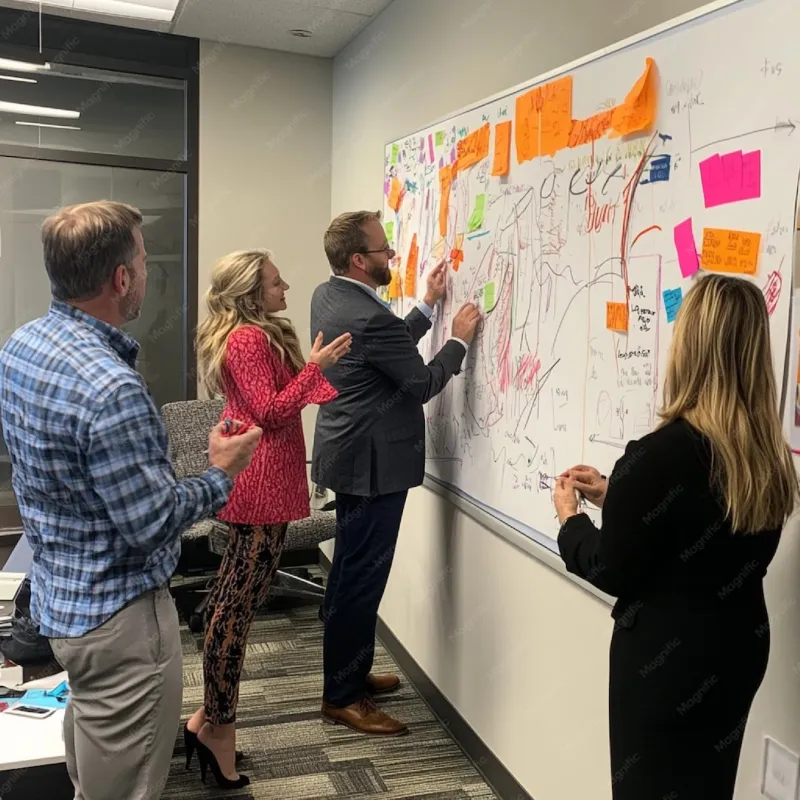
Photo: diverse team collaboration strategic planning whiteboard modern office, via img.freepik.com
Change has always been a feature of the American business landscape. But the pace, frequency, and unpredictability of disruption facing organizations today is categorically different from anything prior generations of leaders navigated. Supply chains that functioned reliably for decades collapsed within weeks. Workforce expectations shifted faster than HR departments could respond. Technologies that seemed years away from mainstream adoption became table stakes almost overnight.
In this environment, the organizations that are winning are not necessarily the largest, the best-funded, or the longest-established. They are the ones that have built genuine adaptability into their structure, culture, and leadership practices. Resilience, in the modern organizational context, is not a personality trait or a motivational posture. It is an engineered capability—and it can be built deliberately.
The Difference Between Surviving Disruption and Designing for It
Most organizations respond to disruption reactively. A market shift occurs, a crisis emerges, or a competitive threat materializes, and leadership convenes to manage the fallout. Teams are reassigned, budgets are reallocated, and communication plans are hastily assembled. The organization survives—often at significant cost to morale, momentum, and margin.
Resilient organizations operate differently. Rather than treating disruption as an anomaly to be managed, they treat it as a baseline condition to be planned for. This distinction shapes everything from how they structure decision-making authority to how they invest in employee development.
The shift from reactive to resilient is not a single initiative. It is a deliberate transformation of how the organization thinks, plans, and operates.
Structural Foundations: Designing for Speed and Flexibility
Organizational structure is one of the least glamorous topics in business—and one of the most consequential. Hierarchies that were designed for stability and predictability become liabilities when the environment demands rapid response. Layers of approval slow decisions. Rigid departmental boundaries impede information flow. Centralized authority creates bottlenecks precisely when agility is most needed.
Building structural resilience begins with an honest assessment of where the current design creates friction. Several specific adjustments have proven effective across a range of US industries.
Distributed Decision-Making Authority. Organizations that push decision-making closer to the point of impact—whether that is the customer, the production floor, or the market interface—are able to respond faster than those that require every consequential decision to travel up and back down a hierarchy. This does not mean eliminating oversight. It means establishing clear parameters within which frontline and mid-level leaders are empowered to act without escalation.
Cross-Functional Capacity. Resilient organizations invest in building teams and individuals who can operate across functional boundaries. When a disruption occurs, the ability to rapidly reconstitute teams around new priorities depends on having people who are not narrowly specialized. This is a workforce development investment that pays dividends specifically when conditions are most volatile.
Modular Planning Frameworks. Annual strategic plans built on static assumptions are poorly suited to dynamic environments. Organizations that have adopted more modular planning approaches—with clear strategic anchors but flexible execution pathways—are better positioned to adjust course without abandoning direction.
The Cultural Dimension: Normalizing Uncertainty
Structure alone cannot produce resilience. Culture is equally important—and in some respects, more fundamental. An organization can have all the right processes in place and still freeze when disruption arrives, if its culture treats uncertainty as a threat rather than an expected operating condition.
Building a resilience-oriented culture requires sustained, intentional effort from senior leadership. A few cultural practices stand out as particularly impactful.
Psychological Safety and the Freedom to Escalate Early. One of the most costly patterns in organizational behavior is the tendency to suppress early signals of emerging problems. Employees who fear that raising concerns will be perceived as incompetence or disloyalty stay quiet until small problems become large ones. Organizations that actively cultivate psychological safety—where surfacing a problem is rewarded rather than penalized—gain access to their own early warning systems.
Learning From Disruption, Not Just Surviving It. After-action reviews are a common practice in military and emergency response contexts. They are far less common in corporate America, despite their proven value. Organizations that build structured reflection into their response to significant disruptions—asking what was learned, what assumptions proved incorrect, and what adjustments are warranted—develop an institutional memory that makes each subsequent challenge more manageable.
Celebrating Adaptation, Not Just Achievement. Most recognition systems reward outcomes. Fewer reward the quality of the process that produced them—especially when that process required significant adaptation under pressure. Organizations that explicitly recognize teams and leaders who navigated uncertainty effectively are reinforcing the behaviors that resilience requires.
Leadership Practices That Enable Organizational Agility
At the center of any resilient organization is a cohort of leaders who are themselves comfortable with ambiguity and skilled at guiding others through it. This is a capability that can be developed, but it requires deliberate investment.
Leaders in high-change environments benefit from specific skill development in several areas: scenario planning and probabilistic thinking, communication under uncertainty, rapid team formation and norming, and the ability to maintain strategic clarity while operational details remain in flux.
One practical approach that several US-based organizations have implemented with measurable results is the use of structured simulation exercises—sometimes called organizational stress tests—in which leadership teams navigate realistic disruption scenarios in a controlled setting. These exercises surface gaps in communication, decision-making, and coordination that would otherwise only become visible during an actual crisis.
From Framework to Implementation: Where to Begin
Organizations considering a serious investment in resilience-building often ask the same question: where do we start? The answer depends on the specific vulnerabilities of each organization, but a few entry points apply broadly.
Begin with an honest diagnostic of current adaptability. Where have recent disruptions caused the most damage, and what structural or cultural factors contributed? This assessment should involve perspectives from across the organization, not just the executive level.
Next, identify one or two high-leverage interventions—structural, cultural, or developmental—that address the most significant gaps. Attempting to transform every dimension simultaneously is a reliable path to initiative fatigue and incomplete execution.
Finally, build measurement into the effort from the beginning. Resilience is not an abstract aspiration. It produces observable outcomes: faster decision cycles, lower turnover during periods of uncertainty, more successful strategic pivots. Tracking these outcomes creates the accountability that sustains long-term investment.
The Organizations That Will Define the Next Decade
The competitive landscape of the next ten years will be shaped by which organizations have genuinely internalized the lessons of recent disruption—and which ones have simply waited for conditions to stabilize.
Stability, in the traditional sense, is not returning. The organizations that thrive will be those that have stopped waiting for it and started building the capabilities to operate effectively without it. That work is available to every organization willing to pursue it with the seriousness it deserves.